
← All services
Abdominal / prostate ultrasound
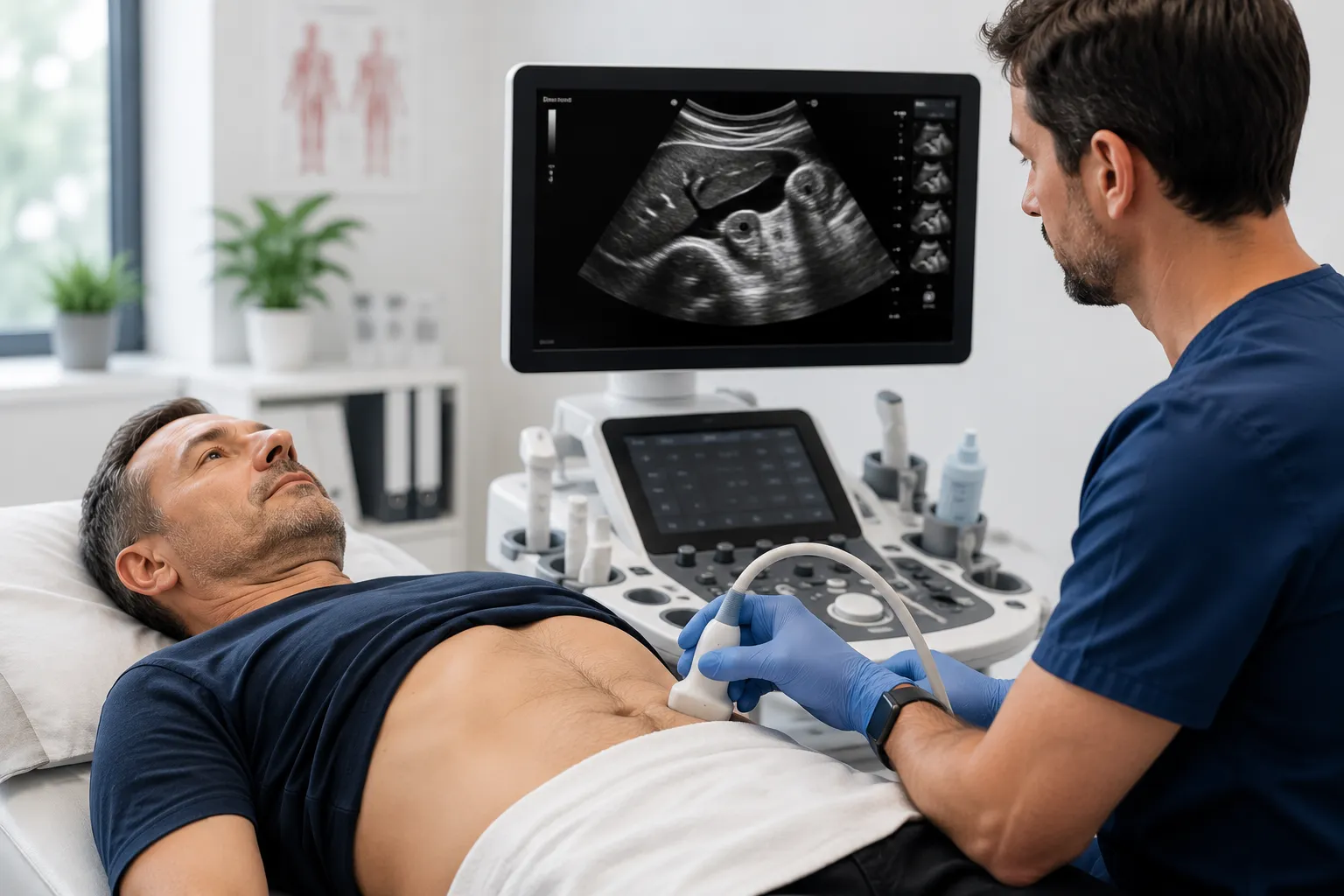
Ultrasound of the abdominal organs and the prostate — for pain, urinary symptoms, and routine check-ups.
Abdominal ultrasound examines the liver, gallbladder and bile ducts, pancreas, spleen, kidneys, and bladder — and in men, the prostate.
The scan detects stones in the gallbladder or kidneys, changes in liver structure, cysts and other lesions, dilated bile ducts, or urine retention in the bladder. For the prostate, its size is assessed and whether it is pressing on the bladder — a common cause of night-time urination and a weak stream.
You lie on your back and gel is applied to the skin. You may be asked to hold your breath briefly so the organs under the ribs can be seen better. The examination is painless and involves no radiation, and the findings are explained immediately.
The scan detects stones in the gallbladder or kidneys, changes in liver structure, cysts and other lesions, dilated bile ducts, or urine retention in the bladder. For the prostate, its size is assessed and whether it is pressing on the bladder — a common cause of night-time urination and a weak stream.
You lie on your back and gel is applied to the skin. You may be asked to hold your breath briefly so the organs under the ribs can be seen better. The examination is painless and involves no radiation, and the findings are explained immediately.
Preparation
For an abdominal scan, come fasting — do not eat for 6–8 hours beforehand so the gallbladder can be seen empty. You may drink water. For a prostate and bladder scan a full bladder is needed: drink 3–4 glasses of water about an hour beforehand and do not urinate before the scan. Take your regular medication with a little water.