
← All services
Holter ECG monitoring (rhythm)
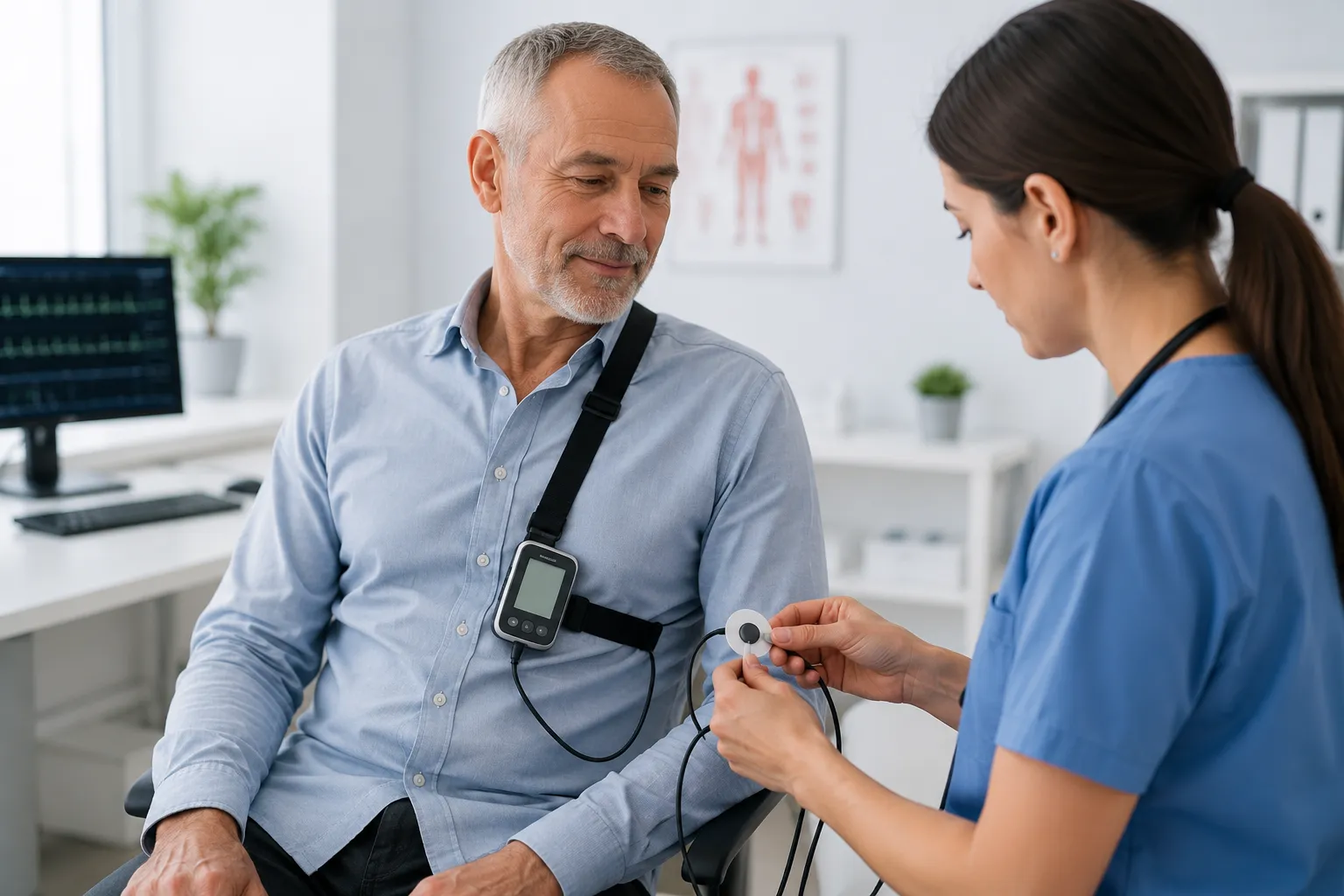
Continuous ECG recording with a small device you wear at home — it captures rhythm disturbances that come and go.
A standard ECG lasts a few seconds and easily misses symptoms that come and go. The Holter is a small device you carry with you that records your heart rhythm continuously throughout the recording period, including while you sleep.
The recording shows whether there are skipped beats, a fast or slow rhythm, pauses, or disturbances that cause dizziness and fainting. It is recommended for palpitations, unexplained loss of consciousness, dizziness, and to check whether antiarrhythmic treatment is doing its job.
Electrodes are attached to the chest and the device is worn in a pouch. During the recording you go about your normal life — it is important to write down your symptoms and the time they occurred, because linking a symptom to the trace is exactly what gives the answer. The device is returned afterwards and the recording is then analysed.
The recording shows whether there are skipped beats, a fast or slow rhythm, pauses, or disturbances that cause dizziness and fainting. It is recommended for palpitations, unexplained loss of consciousness, dizziness, and to check whether antiarrhythmic treatment is doing its job.
Electrodes are attached to the chest and the device is worn in a pouch. During the recording you go about your normal life — it is important to write down your symptoms and the time they occurred, because linking a symptom to the trace is exactly what gives the answer. The device is returned afterwards and the recording is then analysed.
Preparation
Shower before the device is fitted, as it must not be removed or get wet during the recording. Do not apply cream or oil to your chest — the electrodes will not stick properly. Wear clothing that buttons at the front and keep a short diary of symptoms and activities.